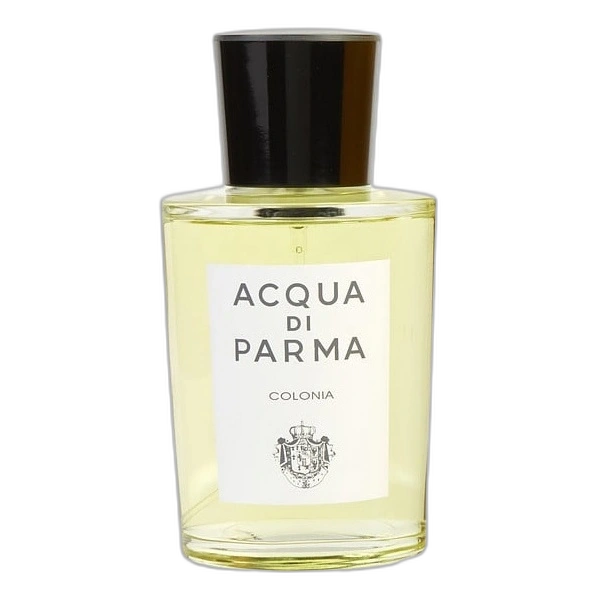
The story of Acqua di Parma
The story begins in 1916, when Carlo Magnani created an eau de Cologne in Parma that felt far lighter than the heavy scents of the day. The Colonia, with its Art Deco bottle and its box in the yellow now tied to the city, became a marker of Italian masculine polish, worn in grand hotels, barbershops and, over the following decades, on film sets. After a quieter spell, the brand was revived in the late 1990s by a group of Italian entrepreneurs and joined LVMH in 2001. From there the wardrobe grew: variations on the Colonia, the Blu Mediterraneo collection inspired by the Italian coast, which gave us Fico di Amalfi in 2006, then richer lines, grooming and home fragrance. Through all of it the founding idea holds: artisanal craft, an understated tone and a distinctly Mediterranean notion of elegance.
An olfactory signature
Acqua di Parma's style comes down to citrus handled with restraint. In the Colonia, lemon, bergamot and orange open onto a very clean lavender, rosemary and verbena before drying down to sandalwood, vetiver and patchouli. Fico di Amalfi keeps that structure but steeps it in fruit: grapefruit and citron, fig nectar, a flick of pink pepper, then fig wood and benzoin. The constant is the contrast between a sparkling opening and a skin-close trail that is never sugary and never loud.
Which Acqua di Parma perfume to choose?
The Colonia is the natural starting point: an aromatic, unisex eau de Cologne that works at the office or on a hot day, though its modest longevity is best stretched by spraying clothing. If you want a sunnier, slightly more edible freshness, Fico di Amalfi brings green fig and a touch of benzoin that keeps it on the skin a little longer.