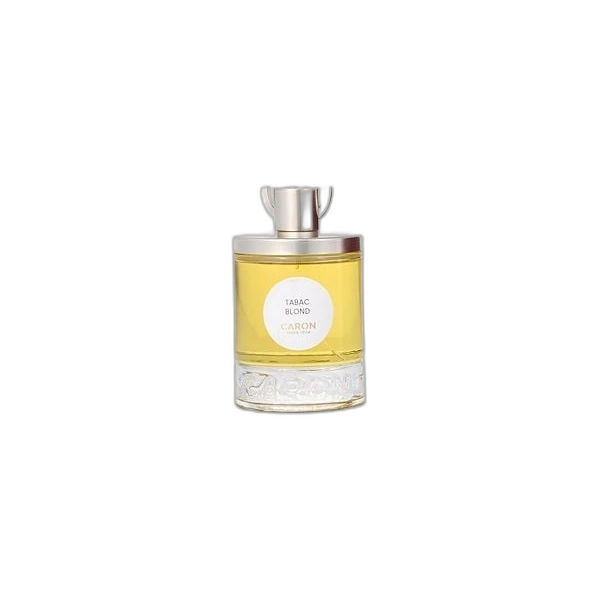
The story of Caron
Ernest Daltroff, a self-taught perfumer, bought a small Paris business in 1904 and founded Caron. He composed most of the house's creations himself, often in partnership with Félicie Wanpouille, who shaped its style and later ran it. Narcisse Noir (1911) built Caron's reputation, followed in 1919 by Tabac Blond, a smoky, powdery leather conceived for the emancipated post-war women who smoked in public. Nuit de Noël (1922) and Pour un Homme (1934), built on a lavender-vanilla accord, completed the pantheon. Daltroff left France in 1939 and Wanpouille kept the house going. Over the decades Caron changed owners several times and reformulated its classics, yet its catalogue remains unusually coherent, a living record of interwar French perfumery. Several of its classics are still produced today.
An olfactory signature
The Caron touch lies in a pairing of daring and powder. Tabac Blond shows it clearly: lemon, bergamot and galbanum up top, a heart of carnation, ylang-ylang and iris, then leather, vetiver and vanilla. Spicy carnation, powdery iris and smoky leathers recur from one creation to the next, with a vanilla that rounds things off without ever turning sweet. It is perfumery with character, built to last. Nothing about it is shy.
Which Caron perfume to choose?
Tabac Blond is Caron's only entry in our database, and it is an excellent key to the house. Choose it if you like powdery leathers, carnation and vintage fragrances with a strong personality. Give it several hours: the green, citrus opening soon gives way to leather, which shows its full shape in the vanilla drydown.