The story of Marc Jacobs
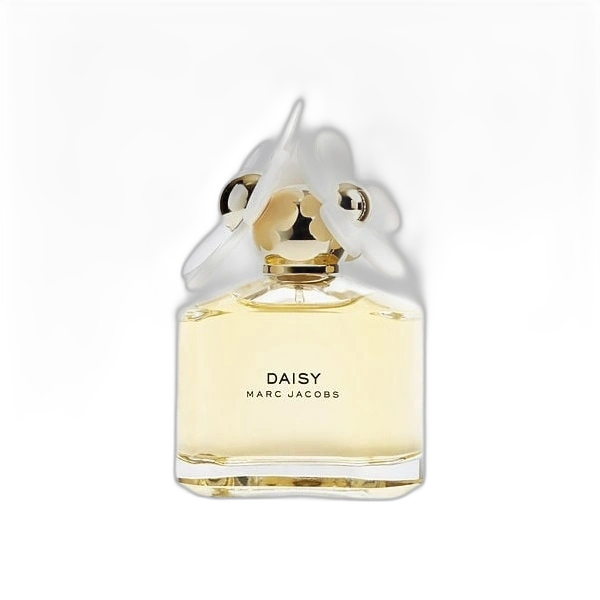
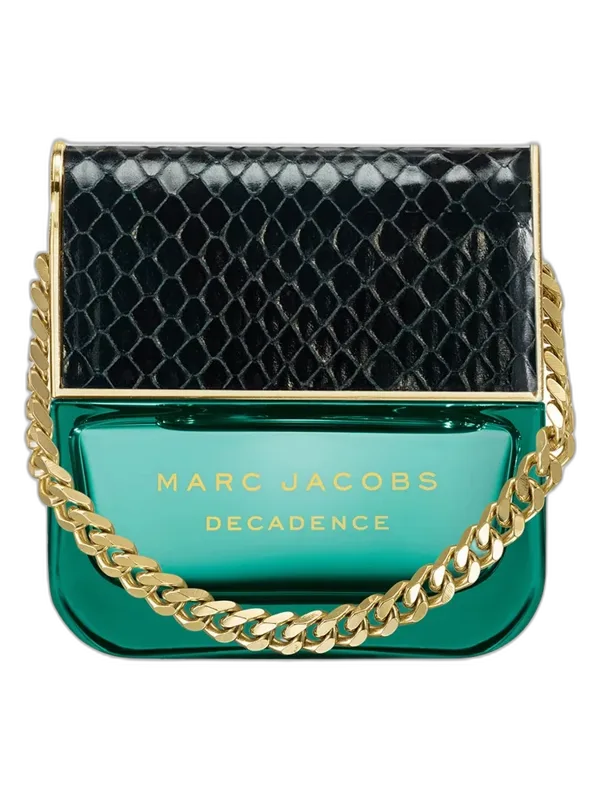
A graduate of Parsons School of Design, Marc Jacobs launched his label in 1984 with his business partner Robert Duffy. He drew attention in the early 1990s with a daring grunge collection, then served as creative director of Louis Vuitton from 1997 to 2013 while building his own house within the LVMH group. His fragrances, developed with the Coty group, often play on humour and freshness. Daisy, launched in 2007 and composed by Alberto Morillas, became a huge success thanks to its daisy-topped bottle and its bright fruity floral character. The line later expanded into many variations. Decadence, in 2015, took the opposite approach with a bottle shaped like a handbag and a more grown-up composition designed for evenings, proving the brand could do sophistication as convincingly as it does carefree charm.
An olfactory signature
Marc Jacobs alternates between carefree charm and sophistication. Daisy opens on violet leaf, blood grapefruit and strawberry, then blends violet, gardenia and jasmine before a base of musk, white woods and vanilla: a fresh, youthful, easy floral. Decadence dives into plum, saffron and iris over a heart of jasmine and rose and a base of vetiver, papyrus and liquidambar. Two moods from the same wardrobe, one for sunny afternoons and one for late dinners.
Which Marc Jacobs perfume to choose?
For a fresh, cheerful daytime scent, Daisy remains the safest choice: light, fruity and floral, ideal for spring and summer. If you prefer something more sophisticated and sensual for the evening, Decadence, with its plum, iris and woody base, offers more depth. Both are classed as feminine, but their temperaments could hardly be more different.