Our take
What does Anaïs Anaïs smell like?
Anaïs Anaïs, launched by Cacharel in 1978, became the scent of romantic youth, echoing the brand’s flowery prints. Its opening is surprisingly green: fresh hyacinth, bitter galbanum and bergamot sketch a morning dew. The heart unfolds a white bouquet led by lily, pure and faintly powdery, supported by jasmine and rose. The base is that of a classic floral of its day, with soft sandalwood, dry vetiver and an oakmoss that gives it an almost chypre structure. It keeps a candid, lightly soapy softness that has stayed in the scent memory of several generations.
When to wear it
For spring days and an unfussy look; it moves lovers of green, nostalgic florals.
The story of Anaïs Anaïs
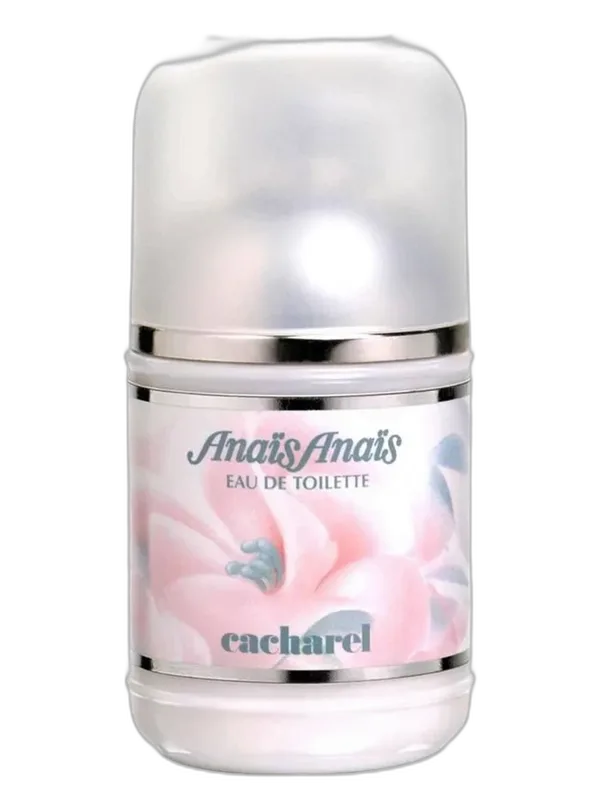
Cacharel, founded in Nîmes by Jean Bousquet in the early 1960s, was known for blouses and floral prints. In 1978 it launched its first perfume, Anaïs Anaïs. Raymond Chaillan, who had just co-signed Opium, worked with Paul Léger and Roger Pellegrino on a green and white floral that echoed the brand's dresses. The white opaline bottle with its floral decoration stood apart from the dark orientals of the time, starting with Opium a year earlier. The doubled first name gives it a nursery-rhyme lilt. It was a huge hit, especially with teenagers and young women. For many it was a first perfume, often received as a gift. It has accompanied several generations, and Cacharel has issued limited editions and newer versions over the years. It is a feminine scent made for youth, and today it carries a strong dose of nostalgia.
Our detailed review
The opening is frankly green. Hyacinth smells of cut stems and dew, galbanum adds a leafy bitterness and bergamot lights things up. For a few minutes it is like a bouquet fresh from the florist. Lily dominates the heart, pure and slightly powdery. Jasmine and rose play support. Then the base settles in with soft sandalwood, dry vetiver and oakmoss. Together they give an almost chypre frame to a scent that seems innocent. Anaïs Anaïs smells of lily soap, a teenage bedroom and cotton sheets. We like its sincerity. It does not try to be more than a pretty floral, and it does that very well. The flaw is its era. The soapy green side can feel dated, even cosmetic, to anyone who did not know it at launch. Restrictions on oakmoss have also thinned the base in current bottles. It suits women who love clean green florals. Anyone looking for something modern or gourmand should pass.
Anaïs Anaïs vs its rivals
Chanel's N°19 shares galbanum and bergamot, along with jasmine and rose. Vetiver and oakmoss are there too. It is the green benchmark. With its iris and leather, it reads drier and more distant than Anaïs Anaïs. Nina Ricci's L'Air du Temps shares bergamot, jasmine, rose and sandalwood. It swaps green for peach, neroli and violet. The result is softer and more powdery. Released in 1988, Calvin Klein's Eternity takes up lily, rose and sandalwood with freesia and sage. It is crisper and carries the white-linen idea of Anaïs Anaïs a decade later. For a tender green floral, Anaïs Anaïs is still the most charming. N°19 suits those who want more elegance. L'Air du Temps is for powder lovers, and Eternity for fans of clean.
Longevity, projection and use
For an eau de toilette, longevity is fair. Expect four to six hours on skin, with light projection after the first hour. The moss and sandalwood base stays faint on clothing. You will need three or four sprays, on the neck, wrists and upper arms. Wear it in spring and summer, during the day. It works well at the office, at school or on holiday. In winter it feels a little thin. It benefits from a top-up around midday.
It belongs to the Floral family. Anaïs Anaïs is one of 20 creations by Cacharel in our encyclopedia.