The story of Cacharel
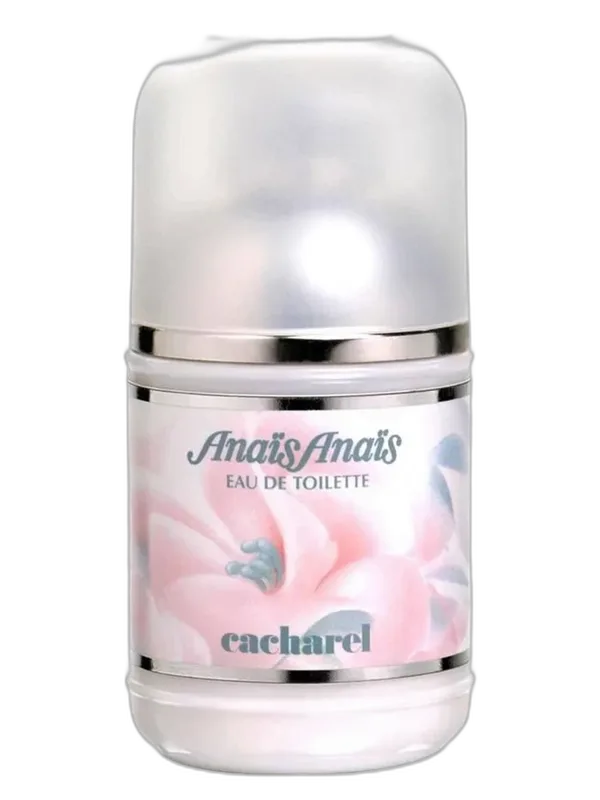
Born in Nîmes, Jean Bousquet founded Cacharel in Paris in 1962, borrowing the name from a marsh bird of the Camargue. The label made its name with fitted blouses and floral prints worn by a younger generation that had little patience for the formality of haute couture. In the mid-1970s Cacharel partnered with L'Oréal to create its fragrance division. Anaïs Anaïs, launched in 1978 in an opaline white bottle decorated with flowers, was its first major success and became one of the best-selling women's fragrances of its time, often given as a first perfume. It was followed by LouLou in 1987, Noa in 1998 and Amor Amor in 2003, among others. The whole line shares one thread: a romantic, fresh and approachable femininity, far removed from the opulence of the great orientals of the era.
An olfactory signature
Cacharel's signature is floral tenderness. Anaïs Anaïs sums it up perfectly: a green, almost dewy opening of hyacinth, galbanum and bergamot, followed by a white bouquet of lily, jasmine and rose that feels bright and powdery. A base of sandalwood, vetiver and oakmoss keeps a light chypre structure, which stops the composition from turning saccharine. It smells of clean linen, fresh petals and a deliberately innocent kind of charm that has aged surprisingly gracefully.
Which Cacharel perfume to choose?
In our database the house is represented by Anaïs Anaïs, its founding fragrance from 1978. Choose it if you like soft, green white florals that stay discreet and classic, perfect for daytime and spring. As an eau de toilette, it is light and easy to wear. For a more modern floral in the same luminous spirit, compare it with Chloé Eau de Parfum.