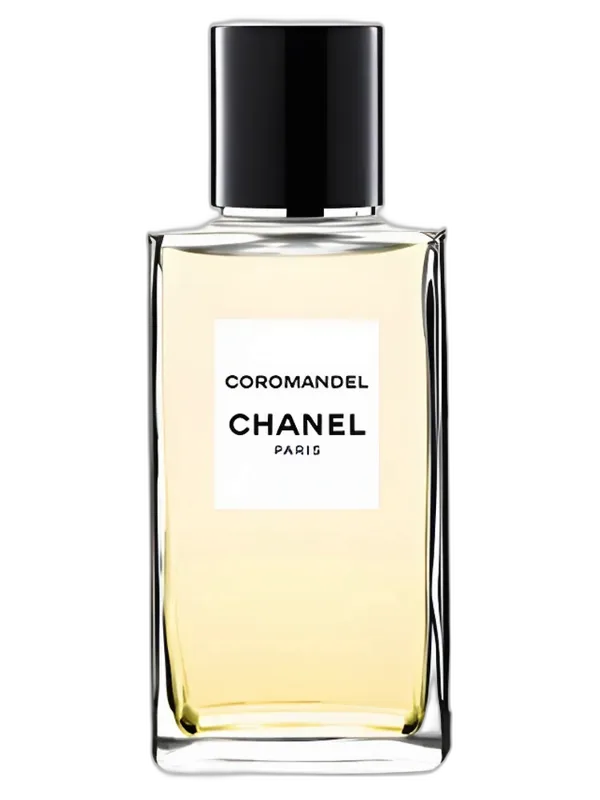
Our take
What does Coromandel smell like?
Composed by Jacques Polge and Christopher Sheldrake and launched in 2007 in Chanel’s Les Exclusifs collection, Coromandel takes its name from the Chinese lacquer screens that Gabrielle Chanel collected. The opening is bright: bitter orange, neroli and citrus briefly lighting the composition. In the heart, patchouli dominates, but a refined, almost chocolatey patchouli, softened by iris, rose and jasmine. The base is a marvel of texture: resinous benzoin, vanilla, incense and musk create a powdery, dry and luminous warmth. Coromandel is a refined oriental, less sweet than you might expect.
When to wear it
Wear it in autumn and winter, at the office or in the evening. It suits lovers of elegant patchouli and sophisticated perfumes.
The story of Coromandel
Coromandel came out in 2007 in Les Exclusifs, the collection Chanel keeps for its own boutiques and a few department stores. Jacques Polge composed it with Christopher Sheldrake, who had joined Chanel after many years working with Serge Lutens. The name comes from the Coromandel lacquer screens Gabrielle Chanel collected, which still line the rooms of her rue Cambon apartment. The screens were themselves named after India's Coromandel coast, from where they were shipped to Europe. The scent is often described as a refined answer to Angel's patchouli, keeping the material and dropping the sugar. It launched as an eau de toilette and is now sold as an eau de parfum, the version this page covers. Coromandel is unisex. Chanel gives it no gender, and it works as well on a man's overcoat as on a black dress. It is the Exclusif we recommend first to anyone discovering the collection.
Our detailed review
The first minutes are surprisingly bright. Bitter orange and neroli give an almost cologne-like sparkle that is gone within half an hour. Then patchouli takes over. This is not the damp earthy patchouli of the 1970s but a cleaned-up dry version with a bitter cocoa edge. Iris powders it and rose rounds it off, while jasmine barely registers. After two hours benzoin and incense draw a resinous, faintly smoky base that vanilla softens without sweetening. Picture a box of dark chocolates kept in a wooden drawer. We rate Coromandel as one of the finest patchoulis on the market. The texture is very fine and everything stays legible. The criticism will come from people expecting a dark oriental. It is more powdery than mysterious, and the price is steep. It suits lovers of elegant patchouli, men or women. Anyone who dislikes powder will find it stifling.
Coromandel vs its rivals
Mugler's Angel shares patchouli, vanilla and tonka, and it is the model Coromandel is most often compared to. But Angel piles on candyfloss, caramel and milk chocolate, so it is far sweeter and louder. Serge Lutens' Ambre Sultan shares the benzoin, vanilla and patchouli, with dry herbs like bay and oregano on top. It is more ambery and resinous, and much less powdery. Frédéric Malle's Portrait of a Lady also crosses patchouli, incense and rose. Rose dominates there, red and tinged with raspberry. It is more theatrical and much heavier. If you want Angel's patchouli without the sugar, Coromandel is the one. Ambre Sultan suits those who prefer amber to powder. Portrait of a Lady is for fans of a showstopping rose.
Longevity, projection and use
Longevity is very good for an eau de parfum. Expect eight to ten hours on skin, longer on clothing where the benzoin clings. Projection is generous for the first two hours before it settles closer without disappearing. Two sprays are enough, one on the nape and one on the upper chest. Use one for the office. Wear it from autumn to late winter, day or evening. It still works on a cool spring day. In summer the powder and resin feel heavy. It is gorgeous on a wool coat.
It belongs to the Oriental / Amber family. Coromandel is one of 48 creations by Chanel in our encyclopedia.