Our take
What does L'Air du Temps smell like?
Released in 1948, barely three years after the war, L’Air du Temps captures a world learning gentleness again, its Lalique doves on the stopper making the point without words. Francis Fabron built a floral of unusual tenderness. Bergamot opens brightly, joined by a velvety peach and a clean, almost soapy neroli. The heart pairs rose and jasmine with a powdered violet that gives the scent its crumpled-petal texture. Underneath, creamy sandalwood and a laundered musk settle over a whisper of cedar. Nothing here shouts. The appeal lies in its translucence, that impression of fresh linen and lightly powdered skin, which has kept it relevant across generations without ever feeling dated or showy.
When to wear it
A daytime spring scent for anyone after something soft and reassuring; it wins over lovers of classic florals who dislike heaviness.
The story of L'Air du Temps
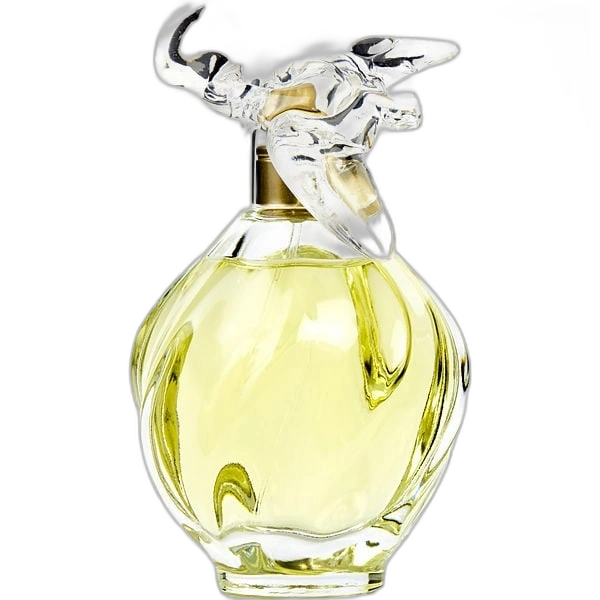
Nina Ricci opened in Paris in 1932. Her son Robert Ricci ran the business and above all the fragrances. In 1948, just after the war, he launched L'Air du Temps by Francis Fabron. The name states the intent: catch the spirit of an age that wanted to forget the dark years and find gentleness again. The bottle that made its legend arrived soon after, in 1951. It is a Lalique crystal flacon topped with two intertwined doves, a symbol of peace. It became one of the most recognisable bottles in perfumery, and plenty of people keep an empty one on a shelf. The scent sold around the world for decades and is one of the oldest feminine perfumes still on sale. Like every classic, its formula has evolved with regulations. It is a feminine fragrance, and one that tends to get handed down from mother to daughter. This page covers the eau de toilette, the version most often found in shops.
Our detailed review
The opening is gentle. Bergamot lifts a velvety peach, and neroli adds an almost soapy note, like a bathroom eau de toilette. No sharpness, no sparkle. In the heart, rose and jasmine are veiled with a powdery, slightly sweet violet. That is what gives the scent its crumpled-petal texture, and it is the best stretch. The base comes quickly. Creamy sandalwood, clean musk and a discreet cedar leave an impression of fresh linen and rice powder on the skin. L'Air du Temps smells like an elegant grandmother's dressing table with a powder compact open. We like its transparency. Nothing is forced, which is rare in a classic. The flaw is how quiet it is. It disappears fast, and current bottles feel thinner than its reputation promises. It suits women who love soft powdery florals and skin scents. Anyone who wants a trail or something modern will be disappointed.
L'Air du Temps vs its rivals
Cacharel's Anaïs Anaïs shares bergamot, jasmine, rose and sandalwood. It swaps peach and violet for hyacinth, galbanum and lily. It is greener and fresher, with a sturdier moss base. Released in 1927, Lanvin's Arpège shares bergamot and peach along with rose, jasmine and sandalwood. Aldehydes and vanilla make it sparklier and richer. It is the great pre-war floral, where L'Air du Temps is the post-war one. Chloé's 2008 eau de parfum takes up the powdery rose with peony, lychee and magnolia. It is more modern and crisper, over cedar and amber. For a very soft powdery floral, L'Air du Temps stands alone. Anaïs Anaïs suits those who prefer green. Arpège is for aldehyde lovers, and Chloé for anyone wanting the same tenderness in a current style.
Longevity, projection and use
Longevity is the weak point. Expect three to five hours on skin, with light projection from the first hour. The musk lasts a little longer on clothing. Four sprays are not too many, spread between neck, nape and wrists. Wear it in spring and summer, during the day. It fits anywhere, from the office to a family lunch. In winter it gets lost under knitwear. Plan to reapply in the afternoon, or wear it on a silk scarf where it holds better.
It belongs to the Floral family. L'Air du Temps is one of 26 creations by Nina Ricci in our encyclopedia.