Our take
What does Opium smell like?
Opium caused a stir in 1977, as much for its name as for its sheer scale. Yves Saint Laurent wanted a scent to match his collections inspired by the East and imperial China, and the result is a spicy oriental of unapologetic opulence. Mandarin opens alongside a dark, jammy plum and clove that is sharp, almost medicinal. In the heart, carnation extends that spice, while jasmine and rose add heady floral flesh. The base (sandalwood, vanilla and amber) stretches into a warm, resinous, slightly powdery trail that clings to fabric for hours. Opium set the tone for the powerful orientals of the 1980s and remains one of the most recognisable perfumes from across a room.
When to wear it
Save it for winter evenings and big occasions, applied sparingly; it thrills anyone who loves spice, resin and perfume with real presence.
The story of Opium
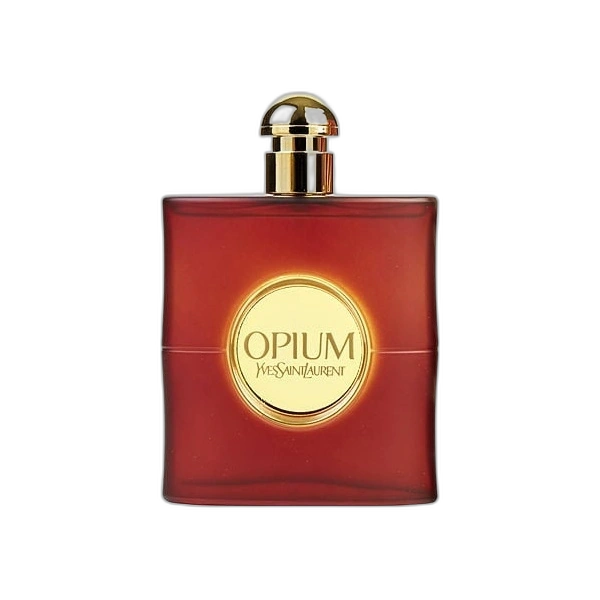
Opium came out in 1977. Yves Saint Laurent had just shown collections inspired by imperial China and the Ballets Russes, and he wanted a fragrance to match. Jean-Louis Sieuzac and Raymond Chaillan composed it as a spicy oriental of rare scale. Designed by Pierre Dinand, the bottle borrows from the inro, the small lacquered boxes Japanese men wore at the belt. The name caused an instant scandal. Campaigners accused it of glamorising drugs, and it drew criticism in several countries. The 1978 New York launch party aboard the Peking, an old four-masted ship, is still one of the most famous in fashion history. Sales were huge. Opium paved the way for the loud orientals of the 1980s, Obsession and Poison among them. The formula has been adjusted over the years, and the bottle changed in the 2000s. In 2014 Black Opium took the name to a generation that had never smelled the original. It is a women's fragrance, but plenty of men have worn it.
Our detailed review
The first minutes are the brightest. Mandarin lifts a dark plum, and clove takes over at once, sharp and almost medicinal. In the heart, carnation stretches the spice while jasmine and rose add heady floral flesh. Around hour two it settles on a base of sandalwood, vanilla and amber, resinous and a little powdery. Think of a lacquered wooden box opened in a heated room, next to a bowl of spiced pot-pourri. We count Opium among the great orientals, and its structure is still a model. The flaw is its scale. Overapplied, it takes over everything, and to some noses the clove recalls a dentist's surgery. The current formula is also drier and less ambery than the 1980s version, which disappoints the nostalgic. It suits anyone who loves spice and wants to leave a trail. Fans of fresh florals will find it overwhelming.
Opium vs its rivals
Estée Lauder's Youth Dew, from 1953, is its direct ancestor. It shares rose, jasmine and vanilla, with aldehydes and peach over a patchouli base. It is oilier and more balsamic, and denser still. Calvin Klein's Obsession shares mandarin, jasmine, sandalwood and amber. It swaps the spice for incense and more vanilla, so it reads more ambery and less sharp. Black Opium, from 2014, keeps only the name and the jasmine. It is a coffee and vanilla gourmand, much sweeter and younger. For the benchmark spicy oriental, Opium is still the right choice. Youth Dew suits fans of very dark balsams. Obsession is for those who prefer amber to spice, and Black Opium for anyone who simply wants an evening gourmand.
Longevity, projection and use
Longevity is very good. Expect eight to ten hours on skin and days on a wool or silk wrap. Projection is wide for the first two hours. One spray is enough by day, two for an evening. Apply it to the nape rather than the wrists, where the spice hits too fast. Wear it in autumn and winter, especially at night. In summer the clove and plum become stifling. For the office, one spray under clothing is the reasonable limit.
It belongs to the Oriental / Amber, Spicy family. Opium is one of 47 creations by Yves Saint Laurent in our encyclopedia.