The story of Lanvin
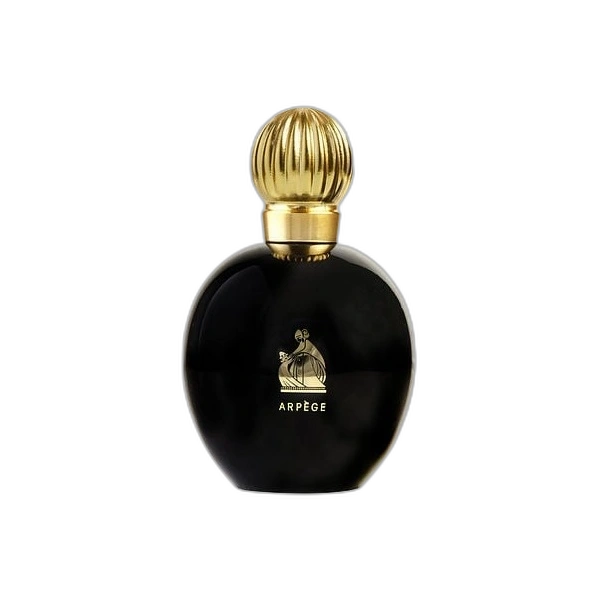
Jeanne Lanvin opened a millinery workshop in Paris in 1889. The clothes she made for her daughter Marguerite caught her clients' eye, and the house expanded into childrenswear and then women's couture. The Lanvin logo, drawn by Paul Iribe, shows Jeanne and Marguerite hand in hand. Perfume arrived in the 1920s. In 1927 Arpège, composed by André Fraysse and Paul Vacher, was dedicated to Marguerite for her thirtieth birthday; its name, meaning arpeggio, nods to her piano studies. The black ball bottle with its gold drawing became an emblem of Art Deco. Arpège established itself as one of the great floral aldehydes of its century, alongside its contemporaries. Jeanne Lanvin died in 1946, and the house has since had several owners, while keeping Arpège at the heart of its fragrance heritage and returning to it regularly with new editions.
An olfactory signature
Arpège, Lanvin's only entry in our database, embodies the classic floral aldehyde. Aldehydes, bergamot and peach give a sparkling, soapy opening, then rose, jasmine and lily of the valley compose an abstract bouquet, before a base of sandalwood, vanilla and vetiver. The effect is luminous, powdery, a little retro and deeply elegant: an evening-gown perfume that recalls interwar haute couture and the grand salons of Paris. It rewards patience on skin.
Which Lanvin perfume to choose?
Arpège is the only Lanvin in our database. Choose it if you love big, powdery, soapy floral aldehydes in the spirit of the 1920s and 1930s classics. It is a dressy fragrance, often worn for an occasion or in the evening, but a light application can also accompany a classic office outfit very well.